The Death Of The Hunter Gatherer Internet
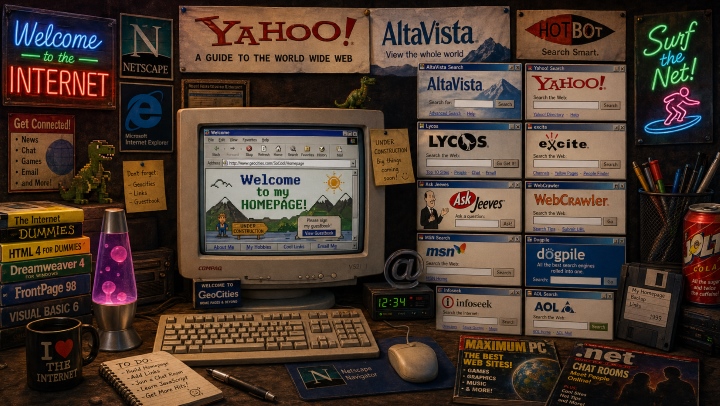
There was a time when searching the internet felt less like querying a database and more like wandering through a digital wilderness.
You’d type a vague phrase into a search engine and spend hours crawling through strange personal websites, forgotten forums, hobby pages, tutorials, experiments and dead ends.
The web rewarded curiosity back then.
Discovery wasn’t optimized.
It was messy, inefficient and wonderfully human.
Back then, finding information often meant finding people. You’d stumble across somebody’s obscure website about graphics programming, retro gaming, astronomy, synthesizers or some strange niche obsession they’d dedicated years to documenting. Many of these sites looked terrible. Some hadn’t been updated in years. Others were hidden three pages deep in search results behind broken layouts and blinking GIFs.
But they were alive.
The internet felt less like a product and more like a frontier.
Over time that slowly changed.
Commercialization arrived first. Then platforms consolidated communities into centralized spaces. SEO transformed writing into ranking strategy. Algorithms replaced wandering with guided pathways. The web became increasingly optimized around engagement, retention and monetization.
Search engines stopped helping users explore the web and started trying to predict exactly what users wanted as quickly as possible.
Convenience won.
The strange little corners of the internet slowly disappeared beneath waves of optimization and commercial abstraction.
Now AI search threatens to push this transformation even further.
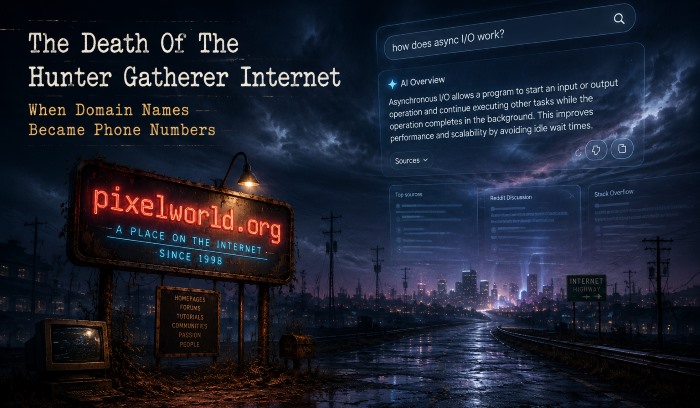
The new direction isn’t simply about finding websites anymore. Increasingly, the goal appears to be eliminating the need to visit them altogether. Rather than returning a list of places to explore, AI systems scan, summarize and synthesize information directly into the search interface itself.
The website becomes invisible infrastructure.
To users this may feel convenient. Faster answers. Less friction. Fewer tabs. But underneath that convenience sits an uncomfortable contradiction.
What happens when the systems consuming information no longer meaningfully support the ecosystems producing it?
For decades the relationship between websites and search engines was at least somewhat reciprocal. Publishers created content. Search engines indexed it and returned visitors in exchange. Traffic became the economic fuel that justified blogs, tutorials, forums, documentation sites and independent publishing.
But AI synthesis changes that equation dramatically.
If users no longer visit the source:
At some point people begin asking an uncomfortable question:
Why spend weeks creating original content only for it to become fuel for systems that benefit someone else?
This is particularly dangerous for niche and enthusiast communities. The web was built upon countless individuals sharing knowledge simply because they cared enough to document it. Technical blogs. Hobby forums. Fan sites. Tutorials. Small communities. Personal archives.
These spaces survive because people feel connected to an audience. They feel discovered. Linked to. Referenced. Visited.
If AI interfaces become the destination instead of the pathway, much of that incentive structure begins to collapse.
Ironically, the more the open web becomes mined and abstracted, the more valuable closed communities may become. Newsletters, private groups, Discord servers, memberships and invite-only spaces start making more sense in a world where publicly accessible information is endlessly harvested but increasingly detached from its creator.
The irony here is thick.
What is a search engine without access to fresh human knowledge?
Eventually it risks becoming little more than a history book built upon the remnants of a once living web.
And perhaps that’s the strangest part of all.
The internet once felt like a place people visited. Websites had identity. Domain names mattered. Communities gathered around destinations. People remembered where they found things.
Now domain names are becoming like phone numbers.
Technically important, but increasingly invisible to the people using them.
The old hunter gatherer internet may already be gone. AI search simply makes the loss impossible to ignore anymore.